How One Simple Strategy Turned a Creative Team’s AI Anxiety into Genuine Capability
A mid-sized creative agency was struggling with something many organizations recognize: their talented team had heard a lot about AI, tried a few tools, and still felt like they were “treading water.”
Twelve months and one well-designed learning program later, the picture had changed completely.
This is the story of what happened — and what any organization can take from it.
The Challenge
In early 2025, a creative agency with deep expertise in custom learning and design commissioned a series of in-depth interviews with department leads. The question on the table was straightforward: how does our team really feel about AI?
The answers were candid — and a little uncomfortable.
Despite working in an industry where AI tools were proliferating rapidly, the team expressed a mixture of genuine excitement and real anxiety. They worried that AI-generated content would erode the creative identity that made their work distinctive. They were concerned about job security. They felt overwhelmed by the pace of change and frustrated by the absence of clear guidance on what they were even allowed to do with these tools.
“It feels like an overwhelming cloud of noisy, uncurated information.” — 2025 interview respondent
The 2025 data revealed a team that was capable, curious — and stuck. They needed structure, not more information. They needed relevance, not more hype. And they needed to feel that the organization was investing in their development, not just expecting them to figure it out on their own.
The Approach
The response was a rapid-cycle AI learning program built on a deliberately simple set of principles:
- Small and frequent. Short, focused content delivered every 2–3 weeks — not annual certification courses or all-day workshops.
- Practical, not theoretical. Every edition answered one question: what can I actually do with this tomorrow?
- Role-aware. Examples grounded in real creative and learning design workflows, not generic tech demos.
- Human-centered. Designed to complement, not replace, the team’s existing expertise and judgment.
The program did not try to make the team into AI engineers. It aimed to make them confident, critical, and creative users of tools that were already reshaping their industry.
The Results — One Year Later
A follow-up survey conducted in 2026 told a markedly different story.
Avg. Engagement Score
Scored Below 3
Recalled Specific Content
Top Skill Requested
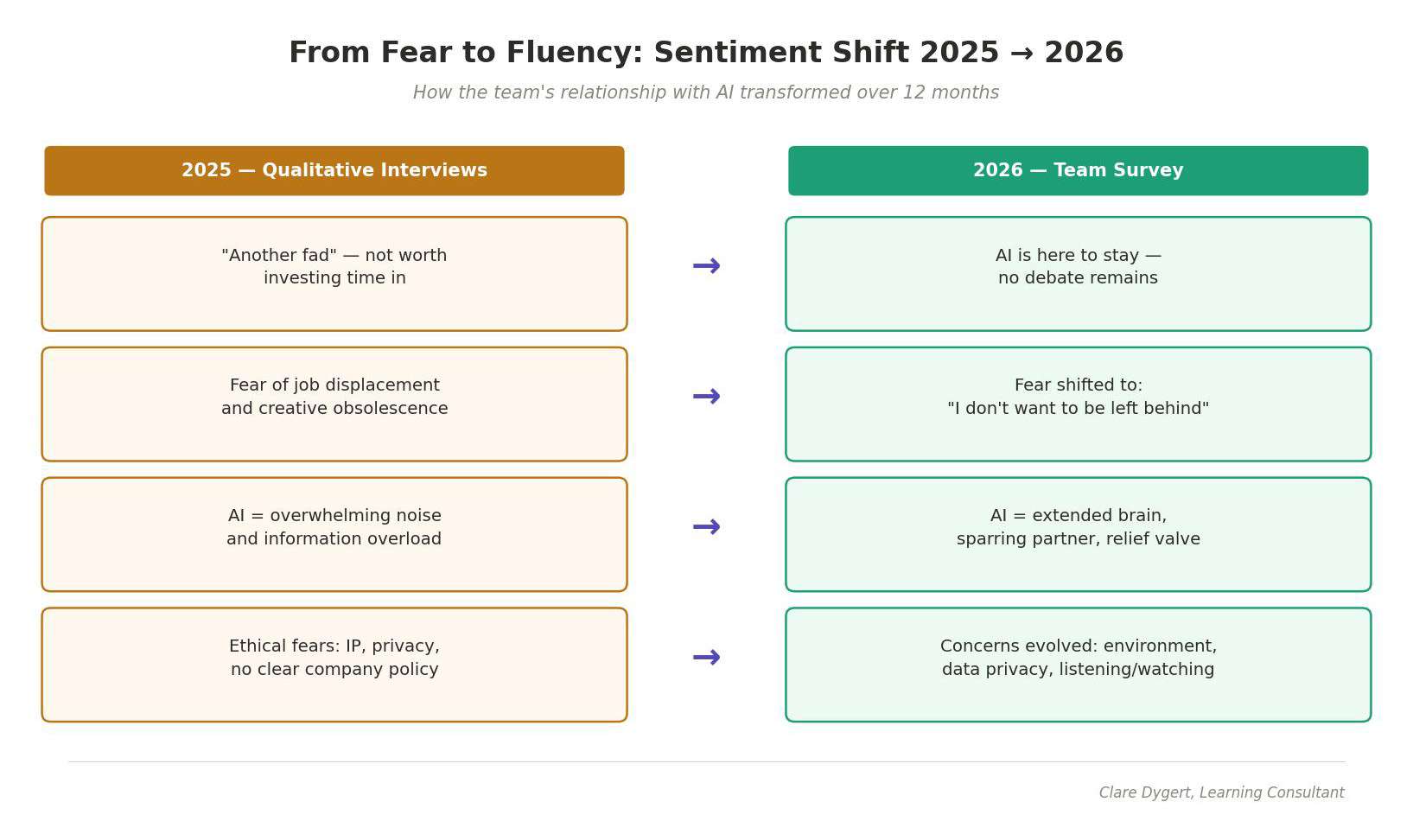
Fear Gave Way to Fluency Hunger
The existential anxiety that characterized 2025 — will AI take my job? is this just a fad? — had largely resolved. In its place was something more productive: a team eager to go deeper, to build more sophisticated workflows, and to understand what they did not yet know. The fear of replacement had shifted to a far healthier motivation to keep pace.
Content was Retained and Applied
Multiple respondents named specific program content unprompted: prompt engineering techniques, specific tool features, research workflows. In a fast-moving domain where content can feel abstract or irrelevant within weeks, this kind of recall is not guaranteed. It has to be earned through relevance and quality.
“I really liked how you described intent engineering.” “Deep research — really useful!” “The one about Gems and Notebook.” — 2026 Survey Respondents
The Vocabulary Matured
In 2025, the team spoke about AI in broad, often anxious terms. By 2026, respondents were using specific, sophisticated language: retrieval-augmented generation, agentic workflows, intent engineering, tool-specific features. This shift in vocabulary is a reliable proxy for genuine learning. People cannot ask sophisticated questions about things they do not understand.
Engagement was High and Sentiment was Warm
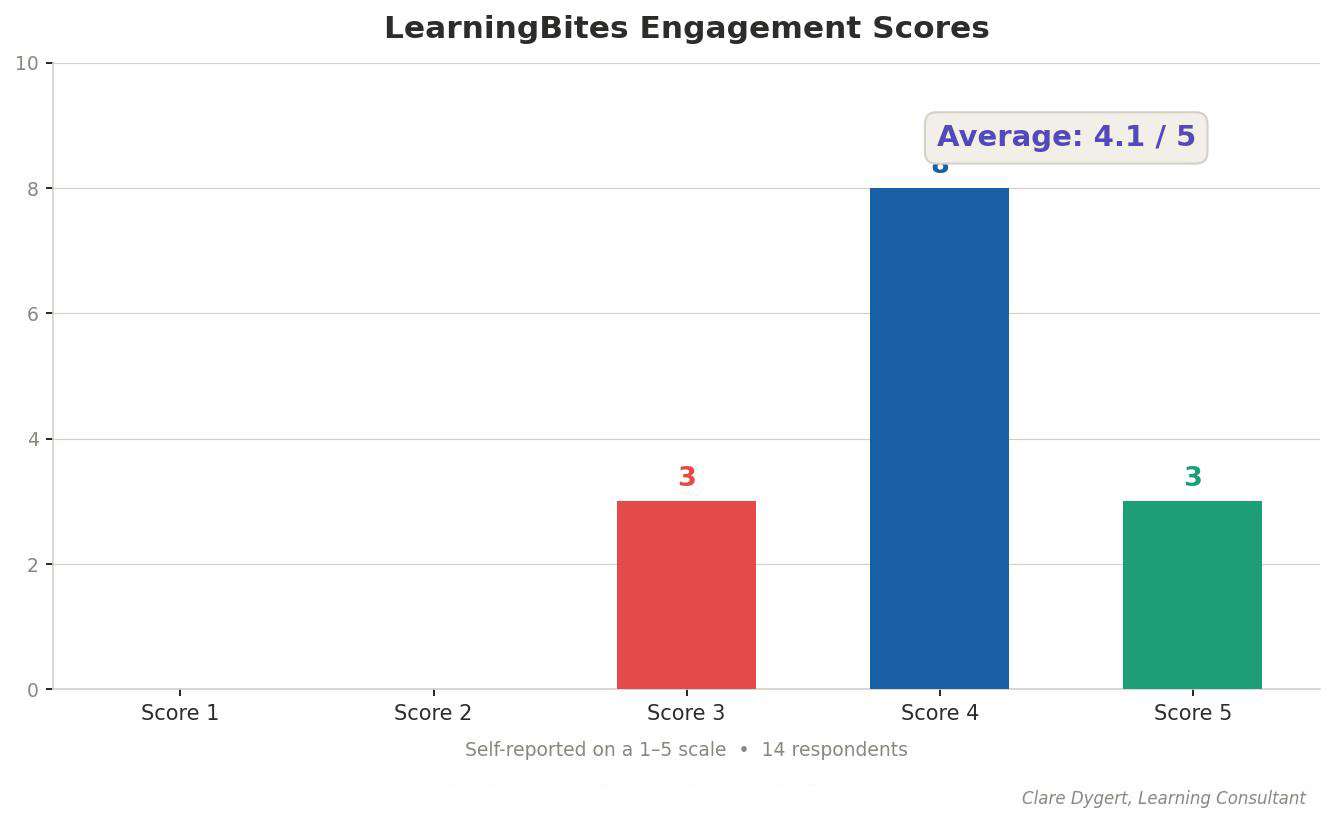
An average score of 4.1 out of 5, with no respondents scoring below 3, is a strong result for any learning program.
The open comments were telling:
“I LOVE this program and hope you continue.” “Thank you so much for all this work.”
The Team Was Ready for the Next Level
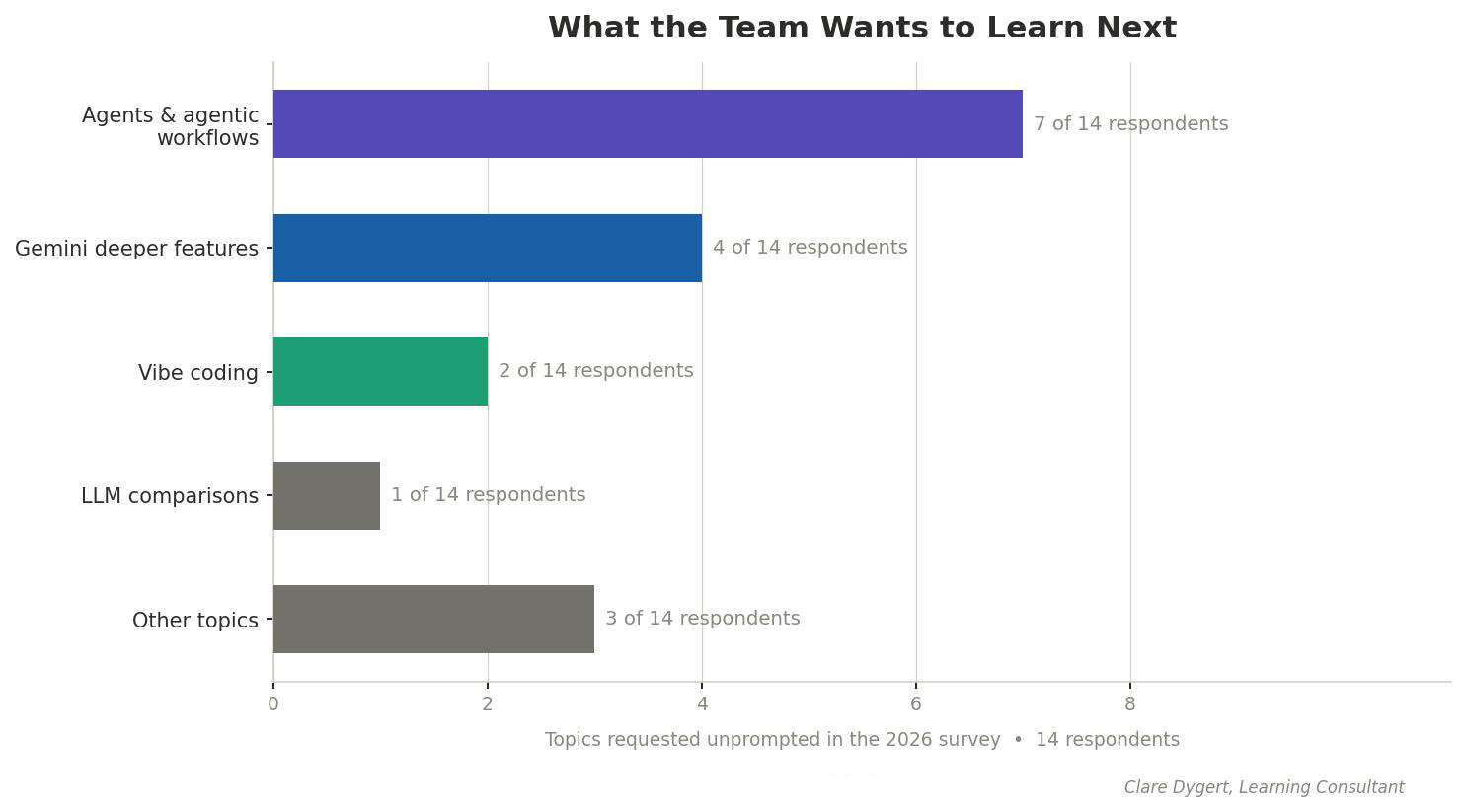
Half the respondents raised agentic workflows unprompted — a sign that the program had not just taught them tools but had raised their ambitions. They were no longer asking what AI was. They were asking what they could build with it.
What This Tells Us
The most important lesson from this case is not about AI — it is about learning design. The team did not transform because they were given access to better tools or more information. They transformed because someone took the time to design a learning experience that met them where they were, respected their intelligence, and gave them something genuinely useful every few weeks.
Small Beats Big
Short, frequent content outperformed workshops and certification courses for this team.
Practical beats theoretical
Every edition answered one question: what can I do with this tomorrow?
Role-specific beats generic
Teams need to see themselves in the examples. Generic AI content lands poorly.
Trust the process
Sentiment doesn’t shift overnight. Twelve months of consistency made the difference.
Is Your Team Ready for the Future?
Most organizations are somewhere on this journey — past the initial hype, not yet at real capability. The gap between those two places is not a technology problem. It is a learning design problem.
If your team is curious but overwhelmed, enthusiastic but inefficient, or simply unsure where to start — this is exactly the kind of challenge I work on. Let’s talk!