Strategic AI Learning Architecture for Organizations in Transition
Clare S. Dygert | AI Learning Systems Architect | Fractional Chief Learning Strategist

The space between “We Have the Tools” and “Our People Think Differently Now” is one of the most consequential places an organization can find itself.
Most treat organizational change as a problem.
I design it as an opportunity.
This is the most important transition we will make together. And you don’t have to navigate it alone.
I will work alongside you as your strategic partner: designing the architecture, yes, but also holding the vision of what’s possible on the other side.

What I Do
I design AI learning and capability-development architectures that help organizations determine what people and teams need to learn, how work needs to change, and how to make those changes stick. That might involve formal training, learning embedded in the flow of work, performance support, or redesigning the work itself.
Engagements typically include learning needs analysis, curriculum architecture, AI fluency program design, change management strategy, and fractional Chief Learning Officer support.
Who I Serve
Mid-size organizations, Learning & Design teams, and executive leaders navigating the transition from AI tool deployment to AI-enabled culture.
I work especially well with organizations that already have learning infrastructure — designers, facilitators, an LMS — and are missing the strategic layer that tells all of it what to do.
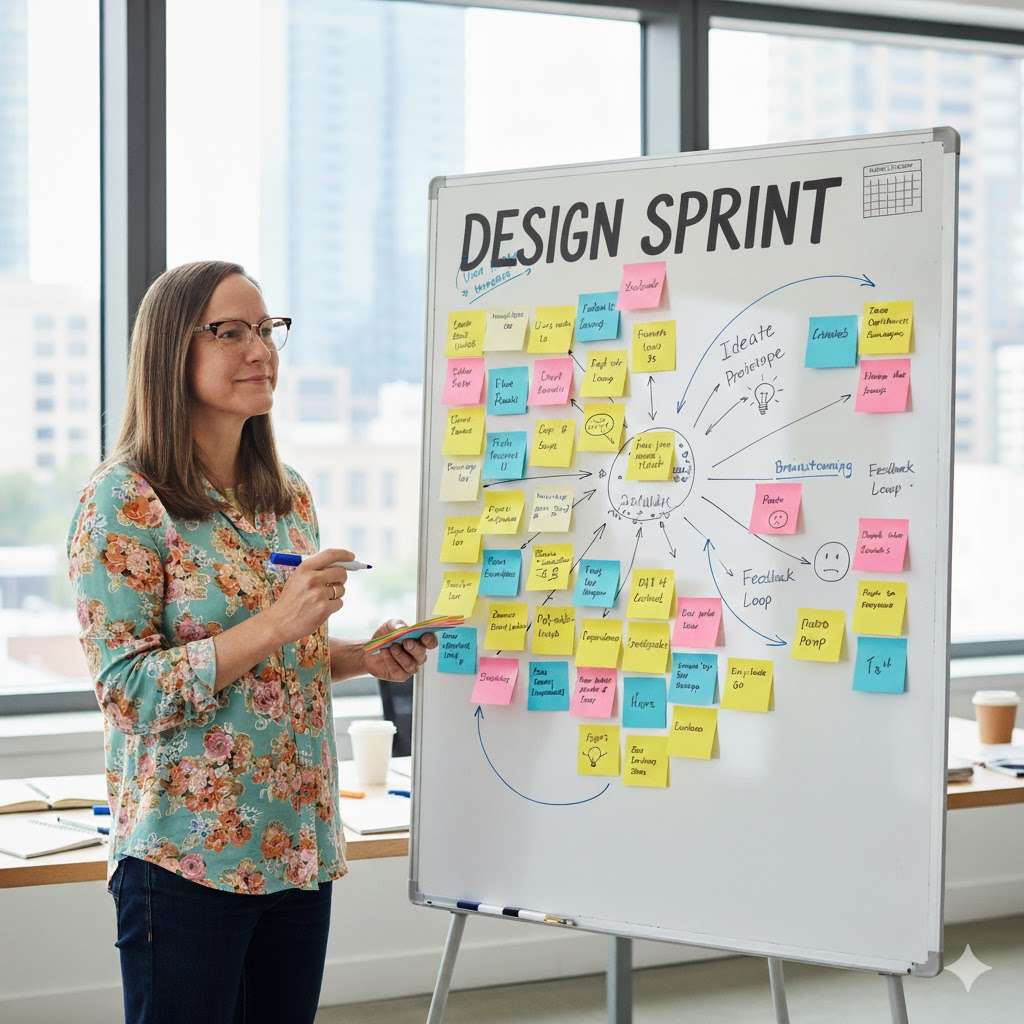
The Methodology
From Transactional to Transformational
Most organizations start on the left. Together, we move to the right.
There are two fundamentally different kinds of learning — and most AI training programs are delivering only one of them. The distinction determines everything about whether our work together actually changes how your people think.
The frameworks I bring to this work are named because they need to be.
The Space Between is the territory where most AI transformations stall — organizations have deployed the tools and run the training, but thinking hasn’t changed. My work is designed specifically for that gap.
Proactive Unlearning is the practice of deliberately releasing outdated mental models before new ones can take hold — because learning and unlearning are not the same process.
And the Human-AI Dyad is the unit of analysis I use to evaluate whether AI is actually changing how people think, or just how they click.
These aren’t metaphors. They’re the design principles behind everything I build.
Operating at the Strategic Layer
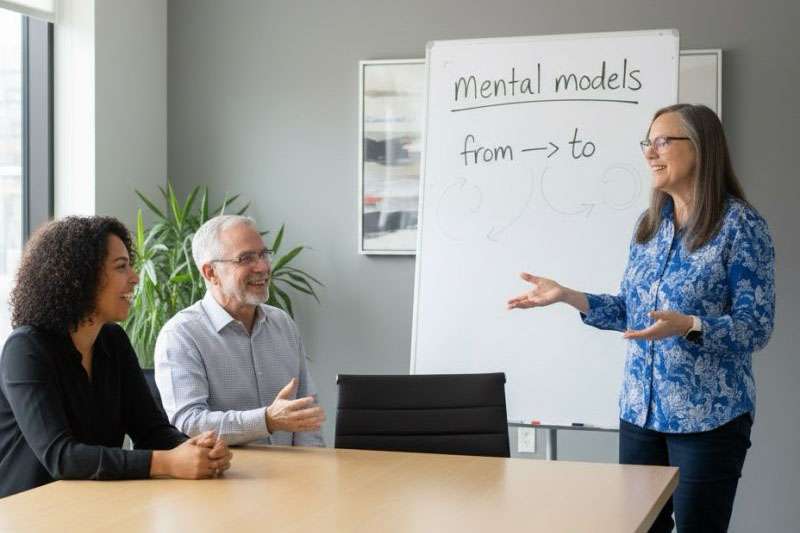
We don’t just build training.
We design the architecture that tells us what to build, for whom, and why.
Many organizations have L&D capacity — designers, facilitators, LMS administrators. What they often lack is a strategic partner thinking architecturally about how learning connects to the future we are building together. That’s the level I work at.
Currently
Clare Dygert, Fractional Chief Learning Strategist at SweetRush and independent consultant. Active projects include curriculum architecture and a technical writing certification pathway. Building AI-powered workflows myself on a daily basis, because we can’t design AI learning if we don’t live it. She is also interested in joining a values-driven organization where she can lead and grow its learning and capability-development work from within.
Credentials & Recognition
· Brandon Hall Gold Award recipient (multiple) · Fractional Chief Learning Strategist, SweetRush · MBA, Simon Business School, University of Rochester · Speaker, Nerd Nite Winston-Salem · Contributor, Elon University AI Cognition Report · Career spanning corporate L&D, higher education, K–12, nonprofit, and municipal government
Articles
Designing Team Learning
Designing for emergence between people, not just within them. But here’s what surprised me in my research: some foundational principles stay remarkably…

The Future According to AI
Hope, Hype, and a Little Disappointment Four Chatbots Walk Into a Question About the Future… Gemini, ChatGPT, Perplexity, and Claude answer my…

The Three Conditions of High‑Performing Learning Teams
There’s a question every learning leader eventually has to answer: how do you build a team that does genuinely creative, high-quality work…

The #1 Skill You Need for Working with AI
Leaders who thrive with AI won’t be the most technical—they’ll be the ones who know how to hand work off well. The…

Why Hire a Fractional Executive?
A better option for nonprofits and smaller businesses to gain custom solutions. One of my very first jobs out of college was…

Our Most Annoying Habits According to AI
What drives AI crazy when working with humans? I asked the LLMs I work the most some questions, then asked Claude to…
Frequently Asked Questions
Clare Dygert is an AI Learning Systems Architect and fractional Chief Learning Strategist with a career spanning corporate learning & development, higher education, K–12, nonprofit, and municipal government. She is a multiple Brandon Hall Gold Award winner, holds an MBA from Simon Business School at the University of Rochester, and is known for her work on transformational learning design, AI fluency, and the strategic architecture of organizational change. She is currently fractional Chief Learning Strategist at SweetRush and works with independent clients navigating AI adoption.
A fractional CLS provides senior-level learning strategy on a part-time or project basis — without the cost of a full-time executive hire. I work alongside your existing L&D team (or stand in for one you don’t have yet) to diagnose learning gaps, design curriculum architecture, align training investments to business outcomes, and build the systems that make AI adoption actually work.
AI training delivers skills and information — how to use a tool, how to write a prompt, how to complete a workflow. AI learning architecture is the strategic layer upstream of that:
- What do people actually need to think differently?
- What learning sequence gets them there?
- What organizational conditions need to be in place for the training to stick?
Architecture determines whether training produces compliance or competitive advantage.
We already know this transition matters.
Let’s work together to do it right.
A 30-minute conversation costs nothing.
Not crossing this threshold together costs everything.