 I heard this from my family. I can’t really vouch for the veracity, but I think the underlying truth is, well, true.
My grandfather and my uncle owned a dairy business back in the day. The way I heard it my grandfather was great with the housewives and my uncle was great with the cows.
Both men had left school, probably around the eighth grade, not because they didn’t appreciate education, but because they needed to work to make a living to support the family. You youngsters probably don’t know this, but I think that was pretty common back in the old days.
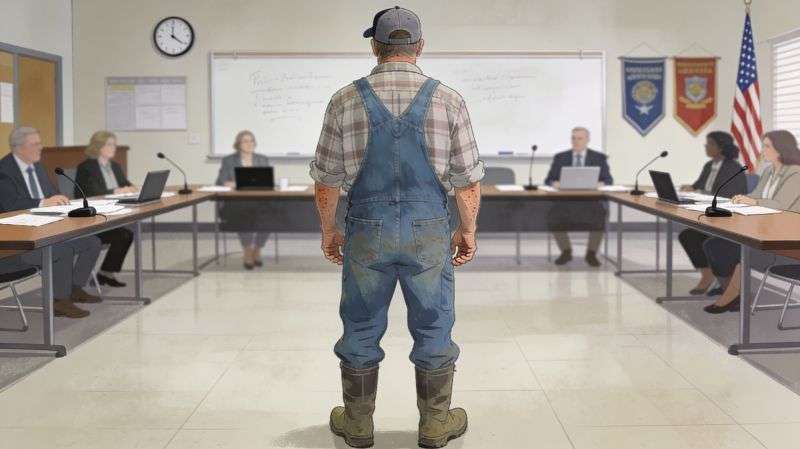
But one day my uncle had some concerns about his children’s education and so he made a visit to a school board meeting.
It did not go well.
Uncle was pretty rough around the edges, admittedly. He was a dairy farmer after all, and when he arrived at the school board meeting in his overalls and boots, well, there was a distinct lack of respect shown to him.
This irritated my uncle. And I will mention that one of the family superpowers is stubbornness. So he returned home and educated himself with the tools he had at hand: the public library and the holy Bible.
And then one day Uncle got himself elected to that school board.
The message to me as a young girl was very clear. We are responsible for our own education. Not being able to go to a formal training program or university program is not an excuse for being uneducated. I believe in the power of self education. I believe that going through the world with a curious mind and open eyes is essential.
But here’s what my uncle’s story taught me about learning design: Formal education doesn’t hold a monopoly on transformation.
My uncle didn’t need a degree to understand governance or advocate for children, he needed motivation, access to resources, and agency to pursue his own path. Yet so much of corporate learning still operates as if the classroom is where “real” learning happens. We create mandatory modules and compliance checklists, then wonder why transformation doesn’t stick.
That dairy farmer in overalls knew something we often forget: learning is an act of agency, not obedience.
What would change in your programs if you designed for curiosity and agency first? Compliance.